
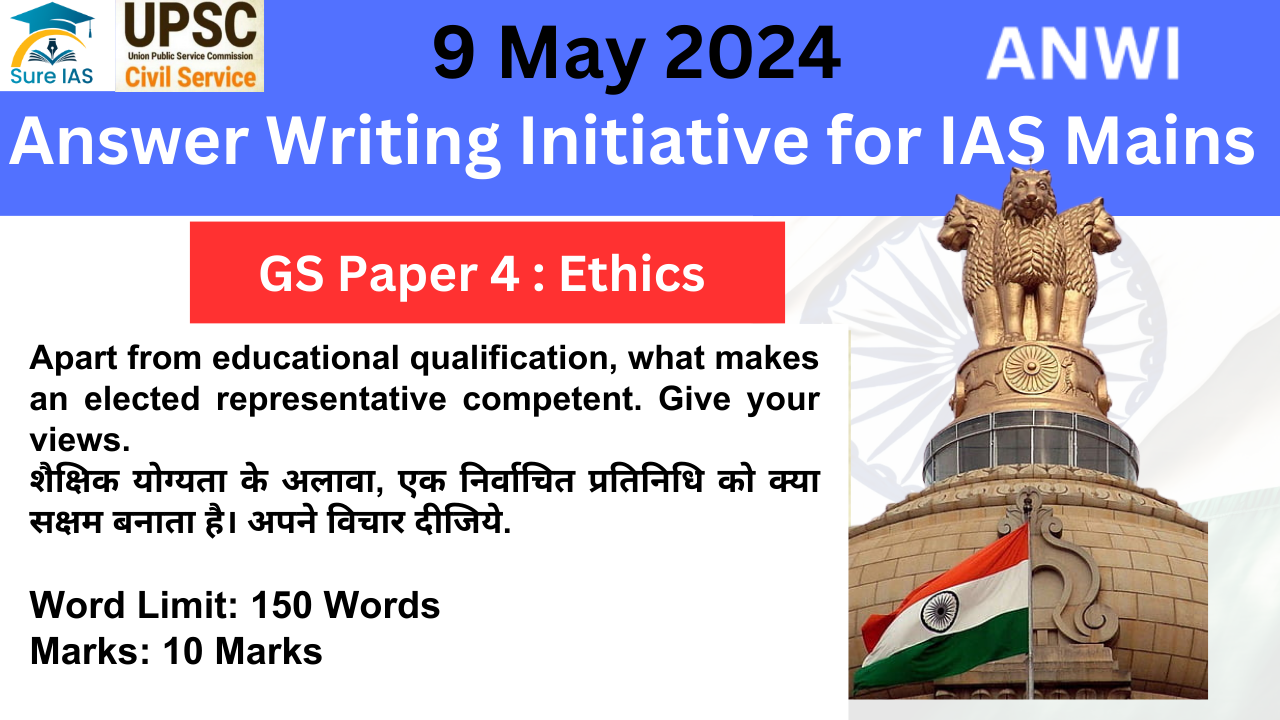
Content for Answer Writing:
An elected representative's competence involves much more than educational qualifications. While formal education can provide valuable knowledge and skills, other attributes are equally important for effective leadership, governance, and representation. Here are some key qualities and traits that make an elected representative competent:
1. Integrity and Ethical Behavior
- Honesty and Trustworthiness:
- Competent elected representatives demonstrate integrity, honesty, and trustworthiness. They are expected to act in the best interests of their constituents and maintain ethical behavior in all their dealings.
- Transparency and Accountability:
- Being transparent about decisions, policies, and expenditures is crucial for gaining public trust. Accountable representatives are willing to explain their actions and accept responsibility for their decisions.
2. Communication and Interpersonal Skills
- Effective Communication:
- Competent representatives are skilled communicators, able to articulate their ideas clearly and listen to constituents' concerns. Good communication helps build rapport and understanding with the public.
- Interpersonal Relations:
- Strong interpersonal skills enable representatives to work collaboratively with colleagues, stakeholders, and constituents. This fosters consensus-building and effective teamwork.
3. Leadership and Vision
- Strategic Thinking:
- Competent representatives have a clear vision for the future and can think strategically about policies and programs. They are able to anticipate challenges and plan accordingly.
- Decisiveness and Problem-Solving:
- Effective leaders can make informed decisions and address problems efficiently. They consider multiple perspectives and choose the best course of action for their constituents.
4. Commitment to Public Service
- Dedication to Serving the Public:
- Competent representatives are dedicated to public service and prioritize the well-being of their constituents. They approach their role with a sense of duty and responsibility.
- Advocacy and Representation:
- Elected representatives should advocate for their constituents' interests and represent their voices effectively. This involves understanding local issues and working to address them.
5. Adaptability and Resilience
- Flexibility and Adaptability:
- The political landscape is dynamic, with changing priorities and unforeseen challenges. Competent representatives can adapt to new circumstances and remain flexible in their approach.
- Resilience in the Face of Challenges:
- Elected representatives often face criticism, setbacks, and complex issues. Resilience enables them to persevere and continue working toward their goals.
6. Knowledge of Governance and Policy
- Understanding of Legislative Processes:
- Competent representatives have a solid understanding of governance structures, legislative processes, and policy-making. This knowledge allows them to navigate complex systems and effectively craft policies.
- Expertise in Relevant Issues:
- While formal education is one way to gain knowledge, practical experience and expertise in specific areas, such as health, education, or infrastructure, contribute to competence in representation.
Conclusion
While educational qualifications can provide a foundation of knowledge, other qualities are equally important for making an elected representative competent. Integrity, communication skills, leadership, commitment to public service, adaptability, and governance knowledge all play crucial roles in determining the effectiveness and success of an elected representative. By embodying these qualities, representatives can serve their constituents effectively and contribute positively to the democratic process.


