

Do you agree that the Indian economy has recently experienced V- shapes recovery? Give reasons in support of your answer.
क्या आप इस बात से सहमत हैं कि भारतीय अर्थव्यवस्था ने हाल ही में V-आकार की रिकवरी का अनुभव किया है? अपने उत्तर के समर्थन में कारण बताइए।
Content for Answer Writing:
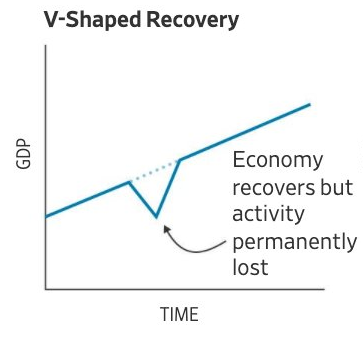
A “V-shaped recovery” refers to a pattern of economic rebound characterised by a sharp decline followed by a swift and robust recovery. The Indian economy's recovery post the COVID-19 pandemic has shown characteristics of a V-shaped recovery, but the extent and sustainability of this recovery are subjects of debate.
Reasons Supporting V-Shaped Recovery
Rapid GDP Growth:
- After a significant contraction of 23.9% in the first quarter of FY 2020-21 due to the lockdowns, India saw a sharp rebound. The GDP growth rates in subsequent quarters indicated a strong recovery trajectory.
- By the end of FY 2020-21, the contraction had moderated to around 7.3%, and in FY 2021-22, the economy bounced back with a growth rate of over 8%.
Industrial Production and Manufacturing:
- The Index of Industrial Production (IIP) saw a rapid rebound after the initial decline. Manufacturing, which took a major hit, recovered strongly, aided by the government's Production Linked Incentive (PLI) schemes.
- The Purchasing Managers' Index (PMI) for manufacturing consistently showed expansion post-recovery.
Revival in Consumption and Demand:
- Consumer sentiment improved significantly with the easing of lockdowns and the roll-out of vaccination drives. This was reflected in higher consumer spending, particularly in the festive season of 2021.
- Retail sales, particularly in sectors like automobiles, electronics, and FMCG, saw substantial recovery.
Exports and Trade:
- India’s exports hit record levels in 2021-22, driven by a global demand rebound and supply chain realignments. Sectors such as IT, pharmaceuticals, and textiles led this growth.
- The trade deficit, although widening, was a sign of increased import demand, reflecting domestic economic activity resumption.
Government and Policy Support:
- The Indian government’s stimulus measures, including the Atmanirbhar Bharat package, provided significant support to businesses and individuals, helping stabilize the economy.
- Monetary policy by the Reserve Bank of India (RBI) ensured liquidity support and low interest rates, fostering credit growth and investment.
Stock Market Performance:
- The stock markets reflected strong investor confidence with major indices like the BSE Sensex and NSE Nifty reaching record highs, buoyed by both domestic and foreign investment.
Critical Perspectives
Uneven Recovery:
- The recovery has been uneven across sectors. While manufacturing and IT services rebounded strongly, sectors like hospitality, tourism, and informal sectors are still struggling.
- The informal economy, which constitutes a significant portion of India’s GDP and employment, has not recovered at the same pace, leading to income disparities.
Employment and Labor Market:
- The unemployment rate, although improved from the peak during the lockdown, remains higher than pre-pandemic levels. Many who lost jobs have either exited the labor market or are underemployed.
- Informal sector workers, who were disproportionately affected, continue to face challenges in finding stable employment.
Inflationary Pressures:
- Supply chain disruptions and increased commodity prices have led to inflationary pressures, impacting the cost of living and eroding real incomes, particularly for the lower-income groups.
Health and Education Impact:
- The long-term impacts on health and education sectors due to the pandemic are still unfolding. Loss of learning due to prolonged school closures and the health impacts of COVID-19 could have lasting effects on human capital.
Conclusion
While there are strong indicators that the Indian economy has experienced a V-shaped recovery, this recovery is not uniform across all sectors and segments of the population. The macroeconomic indicators show a robust rebound, but underlying issues such as employment, informal sector challenges, and inflation need to be addressed to ensure a more comprehensive and sustainable recovery. Hence, while the V-shaped recovery narrative holds, it must be viewed with an understanding of its limitations and the ongoing efforts needed to address the disparities and structural challenges in the economy.


