
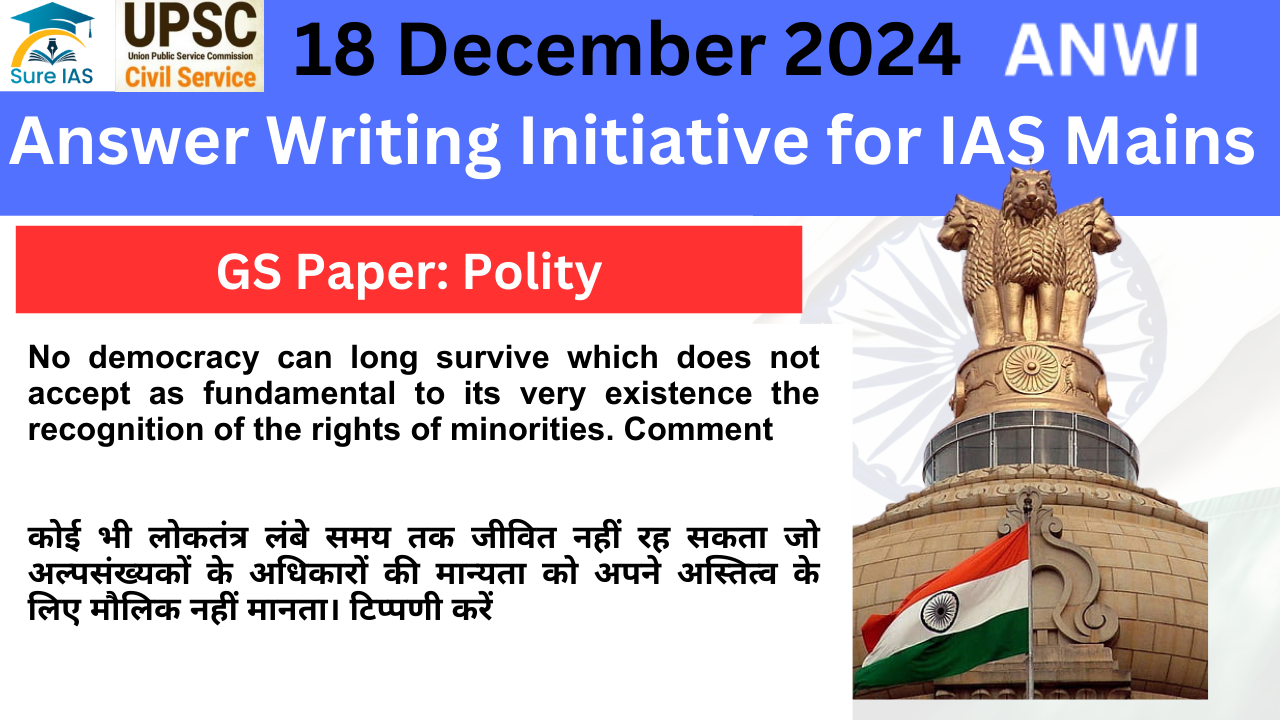
No democracy can long survive which does not accept as fundamental to its very existence the recognition of the rights of minorities. Comment
Content for Answer Writing:
Democracy is built on the principles of equality, justice, and inclusivity. Recognizing and safeguarding the rights of minorities—whether based on religion, ethnicity, language, or culture—is essential for maintaining the integrity and survival of a democratic system. A democracy that fails to protect its minorities risks fostering alienation, marginalization, and social discord, undermining its very foundation.
The Role of Minority Rights in a Democracy
Protection Against Tyranny of the Majority:
- Democracies often operate on majority rule, but without safeguards for minorities, this can devolve into a "tyranny of the majority."
- Recognizing minority rights ensures that majoritarianism does not compromise inclusivity or equity.
Upholding Constitutional Values:
- Most democratic constitutions, including India’s, guarantee fundamental rights that apply equally to all citizens, ensuring non-discrimination and equal protection under the law.
- Article 29 and 30 of the Indian Constitution specifically protect the cultural, linguistic, and educational rights of minorities.
Fostering Social Harmony:
- The recognition and accommodation of minorities’ rights reduce grievances, promote a sense of belonging, and encourage social cohesion.
- Disregard for minority rights often leads to social unrest, as seen in cases of communal violence or ethnic conflicts.
Democratic Legitimacy:
- Democracies derive legitimacy from representing diverse groups and ensuring that all voices are heard. Ignoring minority rights undermines this legitimacy.
Economic and Cultural Contribution:
- Minorities enrich the social fabric through their unique cultural, linguistic, and economic contributions, driving pluralism and progress.
Challenges in Protecting Minority Rights
Majoritarian Politics:
- The rise of majoritarian ideologies often leads to policies that marginalize minorities or undermine their rights.
Discrimination and Prejudice:
- Institutional biases, social exclusion, and stereotyping of minorities can erode their rights and dignity.
Economic Marginalization:
- Minorities often face disproportionate poverty, unemployment, and lack of access to resources, further deepening inequalities.
Cultural Assimilation Pressures:
- The imposition of majority cultural norms threatens the identity and autonomy of minorities.
Ensuring the Recognition of Minority Rights
Constitutional Safeguards:
- Enact and enforce legal frameworks that explicitly protect minority rights and prevent discrimination.
Institutional Mechanisms:
- Establish independent bodies like Minorities Commissions to monitor and address grievances related to minority rights.
Promoting Representation:
- Ensure adequate political, social, and economic representation of minorities in decision-making processes.
Education and Awareness:
- Foster inclusivity and tolerance through education that emphasizes the importance of diversity and coexistence.
International Norms and Cooperation:
- Align with global standards, such as the Universal Declaration of Human Rights (UDHR), to uphold minority rights.
Conclusion
The recognition and protection of minority rights are not merely an ethical obligation but a functional necessity for the survival of democracy. By upholding these rights, democracies like India can ensure pluralism, harmony, and equitable development. Neglecting minority rights risks fracturing the social fabric and eroding democratic principles, underscoring their fundamental importance to a just and inclusive society.


