
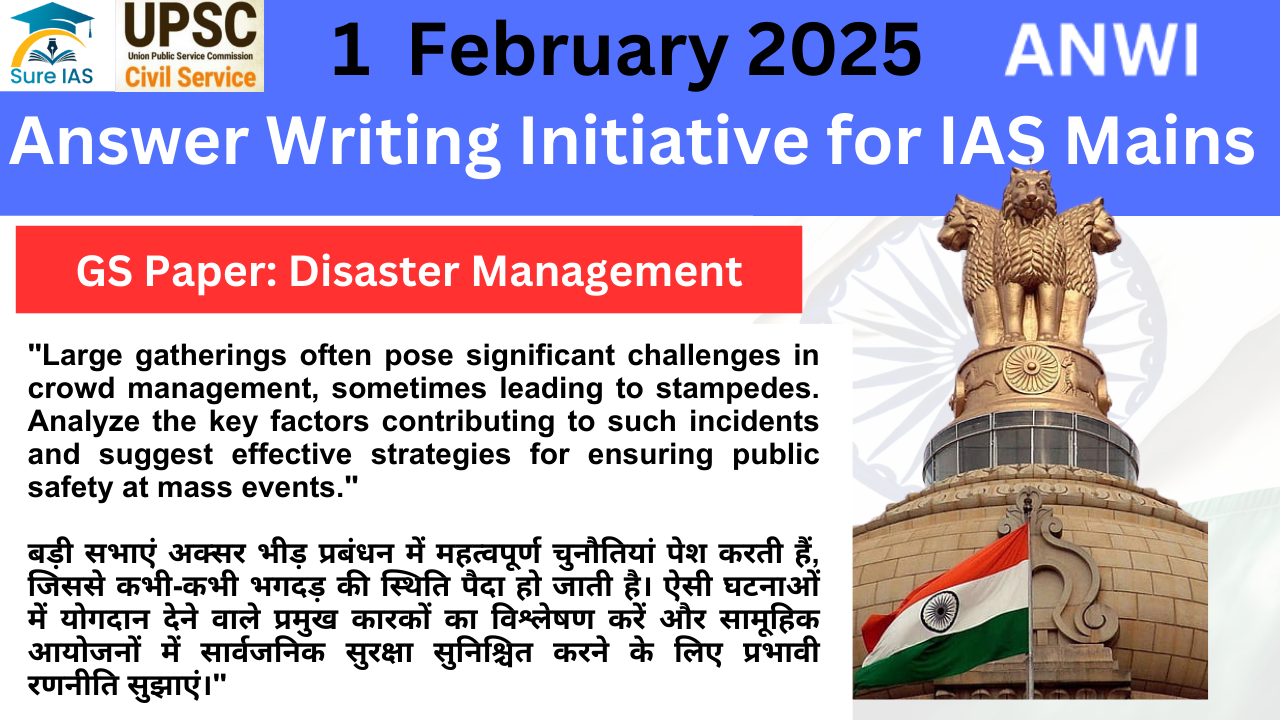
"Large gatherings often pose significant challenges in crowd management, sometimes leading to stampedes. Analyze the key factors contributing to such incidents and suggest effective strategies for ensuring public safety at mass events."
बड़ी सभाएं अक्सर भीड़ प्रबंधन में महत्वपूर्ण चुनौतियां पेश करती हैं, जिससे कभी-कभी भगदड़ की स्थिति पैदा हो जाती है। ऐसी घटनाओं में योगदान देने वाले प्रमुख कारकों का विश्लेषण करें और सामूहिक आयोजनों में सार्वजनिक सुरक्षा सुनिश्चित करने के लिए प्रभावी रणनीति सुझाएं।"
Content for Answer Writing:
Large gatherings, whether religious, political, or cultural, pose significant crowd management challenges, sometimes resulting in stampedes and mass casualties. India, with its frequent large-scale events, has witnessed several tragic incidents due to poor planning, lack of infrastructure, and panic-triggering situations. Effective crowd management is essential for ensuring public safety and disaster mitigation.
Key Factors Contributing to Stampedes in Mass Gatherings
1. Overcrowding and Lack of Space Management
- High-density gatherings exceed the venue's capacity, leading to uncontrolled movement.
- Example: 2013 Kumbh Mela stampede in Allahabad, where a footbridge collapse rumor led to mass panic, killing over 36 people.
2. Poor Crowd Flow Management
- Narrow exits, bottlenecks, and poorly designed pathways create choke points.
- Example: Vaishno Devi Shrine Stampede (2022) due to narrow pathways and excessive foot traffic.
3. Lack of Adequate Security and Surveillance
- Insufficient CCTV monitoring, understaffed police forces, and lack of real-time crowd analytics.
- Example: The 2005 Mandher Devi temple stampede (Maharashtra) due to lack of police presence.
4. Rumors and Panic Situations
- Fear of structural collapses, terrorist attacks, or sudden disturbances triggers chaotic movement.
- Example: 2010 Kerala Sabarimala Stampede, where misinformation caused 145 deaths.
5. Weather and Environmental Factors
- Extreme heat, poor ventilation, or slippery terrain can cause chaos in large crowds.
- Example: Rajasthan Pushkar Mela incidents, where a combination of weather and overcrowding led to stampedes.
6. Lack of Emergency Medical Response
- Delayed first-aid access and poor coordination of ambulances increase fatalities.
- Example: Mumbai Elphinstone Bridge Stampede (2017) highlighted emergency response failures.
Strategies for Effective Crowd Management and Public Safety
1. Smart Surveillance and Predictive AI for Crowd Control
- Use AI-powered crowd density analysis to predict movement patterns.
- Example: Kumbh Mela 2019 used drones and AI to monitor crowd movement in real time.
2. Pre-Event Risk Assessment and Capacity Planning
- Conduct thorough safety audits to ensure venues have multiple safe exits and pathways.
- Implement a ticketed entry system for better crowd regulation.
3. Deployment of Trained Security and Volunteers
- Increase police deployment, private security, and local volunteers trained in disaster response.
- Example: ISKCON temple in Bangalore has a dedicated crowd control team during festivals.
4. Effective Communication and Public Awareness
- Install digital signage, loudspeakers, and mobile alerts to guide crowds.
- Conduct mock drills and public announcements on safety protocols.
5. Emergency Medical and Evacuation Planning
- Set up first-aid stations at regular intervals.
- Deploy quick-response teams equipped with stretchers, wheelchairs, and paramedics.
6. Legislative and Policy Framework
- Enforce strict crowd control regulations under the National Disaster Management Act (2005).
- Mandate crowd safety plans for event organizers.
Conclusion
Managing large crowds requires a multi-pronged approach, integrating technology, policy enforcement, and public awareness. Learning from past incidents and implementing smart surveillance, structured pathways, emergency preparedness, and trained personnel can significantly reduce stampedes and casualties. A proactive approach is essential for ensuring safe mass gatherings in India’s growing urban and religious landscape.


