
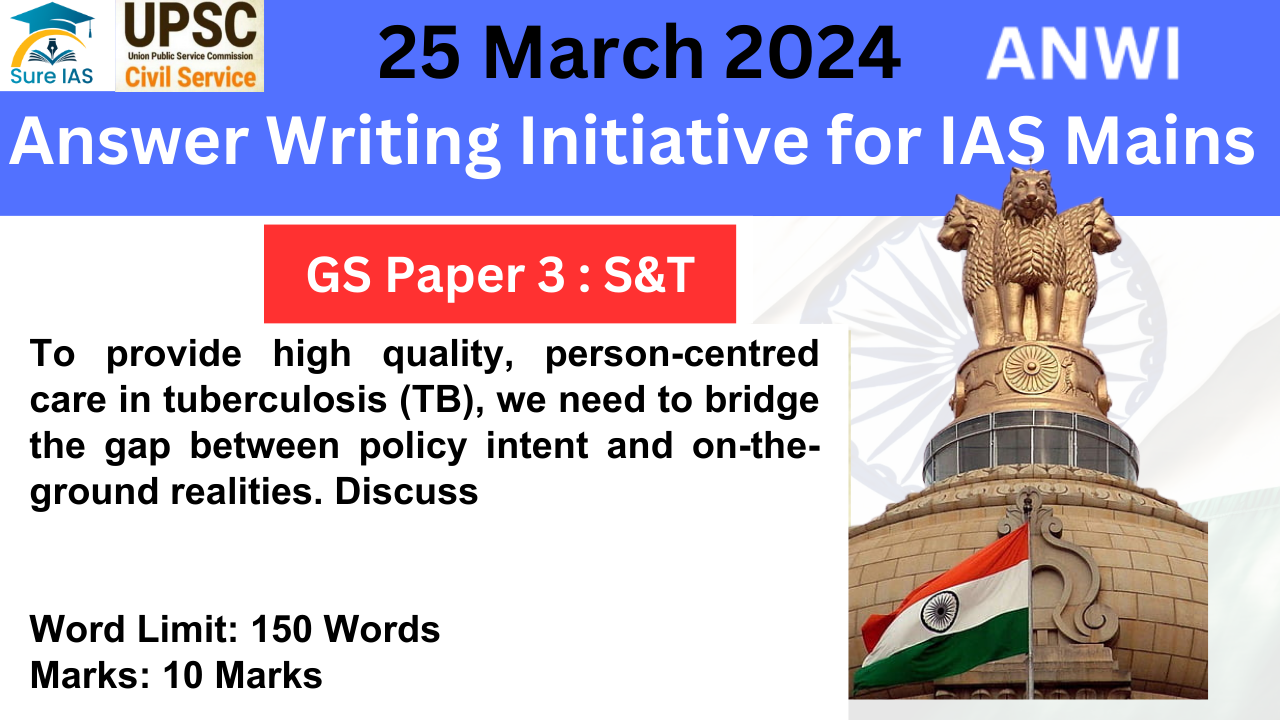
To provide high quality, person-centred care in tuberculosis (TB), we need to bridge the gap between policy intent and on-the-ground realities. Discuss
तपेदिक (टीबी) में उच्च गुणवत्ता, व्यक्ति-केंद्रित देखभाल प्रदान करने के लिए, हमें नीतिगत इरादे और जमीनी हकीकत के बीच अंतर को पाटने की जरूरत है। चर्चा करें
Content for Answer Writing:
Despite the existence of comprehensive policies and guidelines for TB control and management, there are often challenges in translating these policies into effective implementation and ensuring that TB patients receive the care they need.
Why this gap exists and how it can be addressed:
Health System Challenges: Many countries, especially those with high TB burden, face systemic challenges such as weak healthcare infrastructure, limited resources, and understaffed healthcare facilities. This can hinder the delivery of high-quality TB care and services at the grassroots level.
Fragmented Care: TB care often involves multiple healthcare providers and settings, including primary care clinics, hospitals, and community-based organizations. Fragmentation in care delivery can lead to gaps in coordination, communication, and continuity of care, resulting in suboptimal treatment outcomes.
Stigma and Discrimination: Stigma associated with TB can deter individuals from seeking care and adhering to treatment, leading to delayed diagnosis, treatment interruption, and increased risk of transmission. Addressing stigma and discrimination is essential to ensure that TB patients feel supported and empowered to access and adhere to care.
Social Determinants of Health: TB is closely linked to socio-economic factors such as poverty, malnutrition, housing conditions, and access to healthcare services. Addressing social determinants of health requires a multisectoral approach involving collaboration with other sectors such as housing, education, and social welfare to address the underlying drivers of TB transmission and poor treatment outcomes.
Quality of Care: Ensuring the provision of high-quality TB care requires adherence to evidence-based clinical guidelines, regular monitoring and evaluation of treatment outcomes, and continuous quality improvement initiatives.
To bridge the gap between policy intent and on-the-ground realities in TB care, several strategies can be implemented:
Capacity Building: Invest in training and capacity building for healthcare providers at all levels to ensure that they have the knowledge, skills, and resources to deliver high-quality TB care. This includes training on TB diagnosis, treatment, infection control, and patient-centered care.
Integration of Services: Integrate TB services with other healthcare services, such as HIV care, maternal and child health, and non-communicable disease management, to provide comprehensive and holistic care to TB patients.
Community Engagement: Engage communities and civil society organizations in TB prevention, care, and advocacy efforts. Community-based approaches, such as peer support groups, community health workers, and TB outreach programs, can help improve access to care and support for TB patients.
Data-driven Decision Making: Strengthen surveillance and monitoring systems to track TB cases, treatment outcomes, and program performance. Use data to identify gaps in care delivery and prioritize areas for intervention and improvement.
Policy Implementation Support: Provide technical assistance, resources, and support to national and local health authorities to implement TB policies and guidelines effectively. This may include supportive supervision, mentorship programs, and financial incentives for achieving key performance targets.
Empowering Patients: Empower TB patients to actively participate in their care by providing information, education, and counseling services. Encourage patient-centered approaches that take into account patients' preferences, needs, and values in decision-making processes.
By addressing these challenges and implementing these strategies, it is possible to bridge the gap between policy intent and on-the-ground realities in TB care, leading to improved treatment outcomes, reduced transmission, and ultimately, the elimination of TB as a public health threat.


